Choosing a Home Defense Shotgun
The shotgun has guarded farmhouses and homesteads for generations, and it is still one of the most sensible home-defense tools you can own. It is simple, it is legal to buy in every state, and millions of hunters already know how to run one. This guide covers how to choose one, what to feed it, and how to set it up without turning it into something too heavy or complicated to use.
Why a shotgun
At the distances found inside a house, usually under 10 yards, a shotgun loaded with buckshot is very effective. Its long sight radius and shoulder stock make it easier to hit with than a handgun under stress. A pump shotgun also has a very long service life and few parts to fail. The trade-offs are recoil, limited capacity, and length, which makes it harder to move through hallways and doorways.
12 gauge or 20 gauge
The 12 gauge is the most common choice, with the widest selection of guns, loads and accessories. The 20 gauge recoils noticeably less and is lighter, which makes it a better fit for smaller-framed shooters and for anyone who flinches with a 12. A 20 gauge loaded with #3 buckshot remains a serious defensive load. Do not overlook the smaller gauge if it means you will practice more.
Pump or semi-automatic
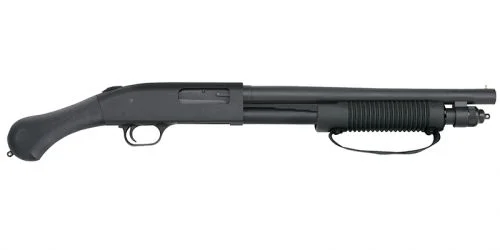
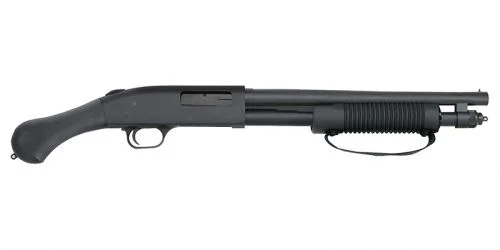
Pump-action
Pumps are affordable, reliable with a wide range of ammunition, and easy to understand. Their weakness is the operator: under stress, people short-stroke the slide and cause a malfunction. That is a training problem, and it goes away with practice.
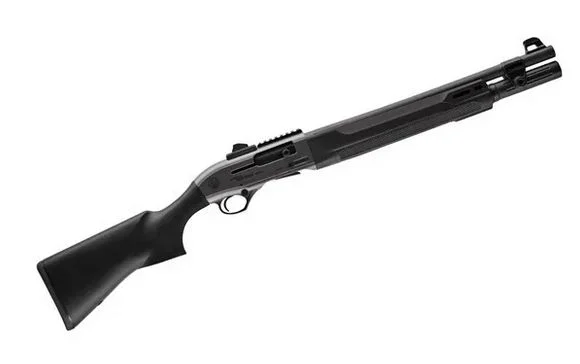
Semi-automatic
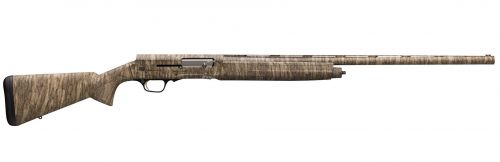
Gas and inertia semi-autos cycle themselves, soften felt recoil (gas guns especially), and allow faster follow-up shots. They cost more and can be pickier with light loads. If you already own a quality semi-auto for waterfowl, it may make a very good home gun with a shorter barrel.
Barrel length and overall size
Federal law requires a shotgun barrel of at least 18 inches and an overall length of at least 26 inches unless the gun is registered under the National Firearms Act. Most dedicated defense models ship with an 18.5 or 20 inch barrel, which is short enough for indoor use while holding five to eight shells in the tube magazine. A hunting gun with a 26 or 28 inch barrel works, but it is harder to move around corners. Many pump models accept an extra short barrel so one receiver can serve both roles.
Stock fit matters more than people think. A length of pull of about 12.5 to 13.5 inches suits most adults wearing a jacket, and a stock that is too long makes the gun feel heavier and recoil harder. Youth or adjustable stocks help smaller shooters.
Choosing ammunition
Buckshot
Buckshot is the standard defensive load. 00 buckshot is the classic, and #1 and #4 buckshot are also common. Reduced-recoil loads make practice more pleasant and are easier to control, and loads with a wad designed to keep the pattern tight help at longer indoor distances.
Birdshot
Small birdshot penetrates walls less, but it also penetrates people far less, and at more than a few feet it may not stop an attacker. Most instructors do not recommend it as a primary defensive load.
Slugs
Slugs are accurate and powerful but penetrate deeply through walls. They make more sense for rural properties and large animals than for a home with neighbors close by.
Whatever you choose, pattern it. Shoot your load at 5, 10 and 15 yards on paper to see how wide it spreads from your barrel. Every pellet you fire is your responsibility, so know where they go.
Accessories worth adding
- A weapon light. You must identify your target. A forend-mounted light is the single most useful upgrade.
- A sling. It frees your hands to open doors, call 911 or hold a child.
- A side-saddle or buttstock shell carrier for a few extra rounds.
- Good sights. A bead works, but a ghost ring or a small red dot helps with slugs and faster aiming.
Keep it simple. Every accessory adds weight, and a shotgun that is too heavy to hold steady is a poor defensive tool.
Storage and readiness
A common setup keeps the magazine tube loaded, the chamber empty and the safety on, stored in a quick-access long gun safe. To use it you rack the slide, which chambers a round. Check your state's rules on magazine capacity for long guns: Vermont, for example, limits new long gun magazines to 10 rounds. See our safe storage guide for container options.
Practice
Shoot your home-defense shotgun enough to run it without thinking. Practice loading, unloading, clearing a short-stroke malfunction and mounting the gun with the light on. Many state wildlife agencies run public ranges with shotgun areas, including LDWF ranges in Louisiana, MDWFP facilities in Mississippi and the Pete Lien and Sons complex in South Dakota. A basic defensive shotgun class is worth the money.
Quick picks by situation
- First gun on a budget: a 12 or 20 gauge pump with an 18.5 inch barrel.
- Recoil-sensitive shooter: a 20 gauge gas semi-auto or a 12 gauge with reduced-recoil buckshot.
- Hunter who wants one gun: a pump with an interchangeable long bird barrel and a short defense barrel.
- Rural property: a 12 gauge that runs slugs and buckshot, with a light and a sling.
Buying your shotgun
Browse pump and semi-automatic shotguns, buckshot and lights in the shop. Your shotgun ships to the FFL you choose; read the FFL transfer guide for how pickup works, and check our home defense law overview for your state's buying rules. Local pages are listed under gun shop locations.
General information, not legal advice. Current as of September 2026. Laws change; check the official source before you act.