Your First Rifle: A Practical Buying Guide
A rifle is one of the most useful tools a household can own. The right one can put meat in the freezer, protect livestock from predators and defend the home. The wrong one sits in the safe because it kicks too hard or costs too much to feed. This guide helps you pick a first rifle that fits what you will actually do with it.
Start with the job
Before you look at models, write down the one or two jobs you want the rifle to do:
- Learning and plinking: cheap to shoot, low recoil, quiet.
- Home and property defense: easy to handle, quick follow-up shots, room for a light.
- Deer and larger game: enough power for clean kills at realistic distances.
- Varmints and predators: flat shooting and accurate at longer ranges.
One rifle can cover two of these jobs well. Trying to cover all four with one gun usually means compromises.
The .22 LR: the best first rifle for most people
A .22 Long Rifle is quiet, has almost no recoil and costs pennies per shot. It teaches trigger control and sight picture better than anything else, because you can shoot hundreds of rounds in an afternoon without fatigue. It is ideal for small game and pests at modest distances. It is not a deer cartridge and is not a first choice for defense. Almost everyone who owns rifles ends up owning a .22, so it is rarely a wasted purchase.
AR-15 style rifles
The AR-15 in .223 Remington / 5.56 NATO is the most popular rifle in the country. It is light, has mild recoil, is highly adjustable to fit different shooters and takes lights and optics easily. For home defense, a 16 inch carbine with a weapon light is easy to shoot accurately. It is also a strong choice for coyotes and hogs, and the platform can be rebarreled in other calibers.
Check your state's rules before buying. Vermont limits new long gun magazines to 10 rounds, and some hunting regulations limit magazine capacity in the field or restrict certain calibers for big game. Several of the states we serve, including Louisiana and Mississippi, allow hog hunting year round on private land, where an AR is a common tool.
Bolt-action rifles for deer and elk
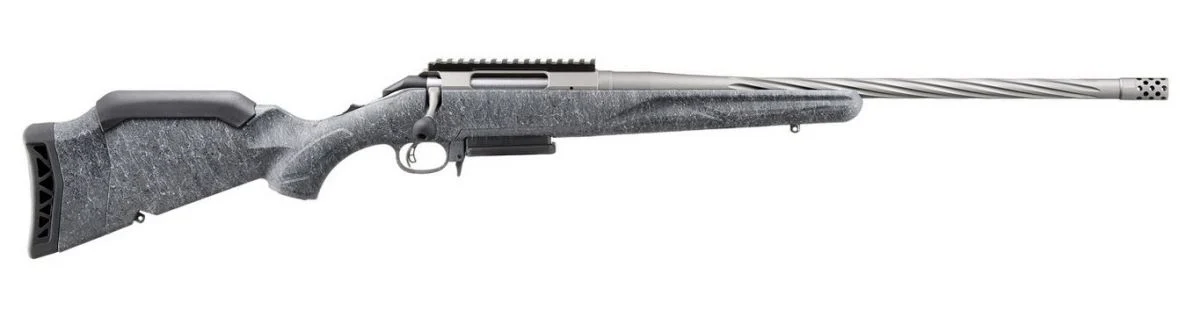
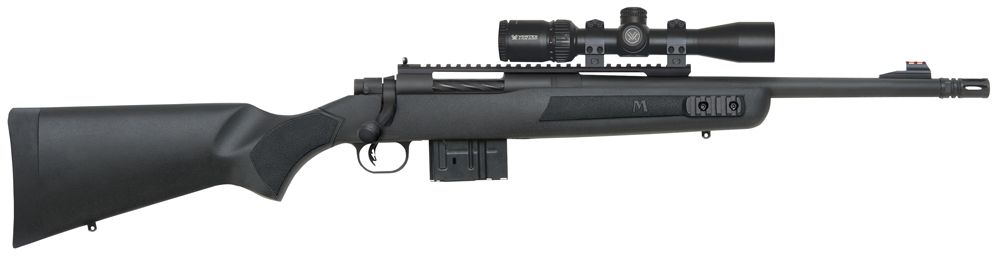
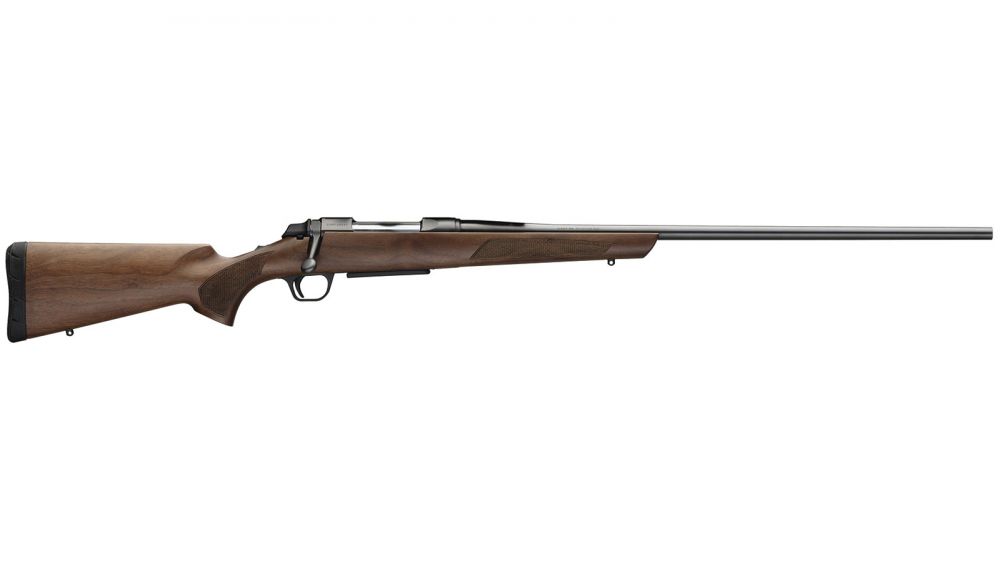
A bolt-action rifle is accurate, simple and reliable, and it is the traditional choice for deer, antelope and elk. Popular cartridges include:
- .243 Winchester: light recoil, good for deer and antelope at moderate ranges.
- 6.5 Creedmoor: mild recoil, accurate, very popular for deer and long-range practice.
- .308 Winchester: a versatile standard for deer and black bear.
- .30-06 Springfield: a classic that handles everything from deer to elk.
For Western elk country in Montana or Wyoming, many hunters step up to the .30-06, 7mm magnums or similar. For whitetails in the timber of West Virginia, Wisconsin or Maine, a .308 or even a lever-action .30-30 is plenty.
Lever-action rifles
Lever guns are light, fast-handling and legal almost everywhere. In .30-30 they are classic woods deer rifles; in pistol calibers such as .357 Magnum or .44 Magnum they make handy home and ranch carbines that share ammunition with a revolver.
Optics and sights
Most hunting rifles need a scope. A 3-9x40 or 2-7x variable scope covers most deer hunting. For home-defense rifles, a red dot sight or a low-power variable optic of 1-6x is faster at close range. Buy good rings and mounts, and zero the rifle before the season at a known distance. Budget roughly a third of the rifle's price for the optic.
Fit and recoil
A rifle that fits you is easier to shoot well. Length of pull, comb height and weight all matter. Heavier rifles recoil less but are harder to carry up a ridge. A good recoil pad and a muzzle brake, where legal and appropriate, reduce felt recoil. If you flinch, drop to a milder cartridge; accuracy beats power.
Ammunition and practice
Buy enough ammunition to practice. Shoot from a bench to zero, then practice from field positions: sitting, kneeling and off shooting sticks. Many state agencies run public ranges, including WVDNR ranges throughout West Virginia, North Dakota Game and Fish ranges near Bismarck, and South Dakota's shooting complex near Rapid City. Sight in a few weeks before your season, not the night before.
Storage and safety
Store rifles unloaded in a locked safe, with ammunition kept apart if children live in the home. A defensive carbine can live in a quick-access long gun safe. Our safe storage guide covers the options, and our shotgun guide compares the shotgun alternative for home defense.
Age and purchase rules
Under federal law, licensed dealers may sell rifles and shotguns to buyers 18 and older. Some states add rules: Vermont generally requires buyers to be 21 unless they hold a hunter safety certificate or meet other exceptions, and both Vermont and Maine have 72-hour waiting periods. See our home defense and gun law overview for a summary by state.
Our suggestions
- Never owned a rifle: start with a .22 LR, then add a second rifle for your main job.
- Home and homestead: a 16 inch AR-15 carbine with a light and a red dot.
- Whitetail hunter: a bolt-action in .308 or 6.5 Creedmoor with a 3-9x scope.
- Western big game: a bolt-action in .30-06 or a magnum you can shoot well.
Buying your rifle
Browse rifles, optics and ammunition in the shop. Your rifle ships to the licensed dealer you choose, where you complete the paperwork and background check; the FFL transfer guide explains each step. Local pages with nearby ranges and seasons are listed under gun shop locations.
General information, not legal advice. Current as of September 2026. Laws change; check the official source before you act.